• Electronic Press Kit (EPK)
  • Home
  • New Music
    • There You Are Lyrics
  • Blog
  • Photos

    Home at Last

    • Electronic Press Kit (EPK)
    • Home
    • New Music
      • There You Are Lyrics
    • Blog
    • Photos

    From the desk of Dr. Papi

    Bella Musica! 

    How the Term “Jazz” Originated

    A book review on the Italian American relationship to Jazz


    Recently my friend Lovano gave me a book that traces the history of jazz from its earliest New Orleans beginnings through today, chronicling the contributions of Italian Americans to this great music. “Bebop, Swing, and Bella Musica”, written by Bill Dal Cerro and David Anthony Witter is not only a fascinating read, but a strong reference for lovers of jazz history.

    Many people who write about jazz have strong arguments detailing the contributions of the many African American musicians who first developed the sounds around the beginning of the 20th century in and around the city of New Orleans. There is no disputing the important contributions made to the music that became jazz. People like Buddy Bolden, Joe Oliver, Jelly Roll Morton, and Louis Armstrong deservedly had a foundational part in Jazz history.

    However, like many historical accounts, popular views become accepted as generalized facts- ignoring the marginal stories that were indeed part of history but somehow deemed irrelevant. The phrase “history is often told by those who are the victors” is applicable to Jazz as well. Jazz music was created through a combination of the many cultural traditions coming together as one during a time of great diversity in New Orleans.

    As the twentieth century approached, New Orleans became known as a city where immigrants from many nations lived and worked side by side, sharing each other’s traditions, including music. 

    Those who believe that jazz was rooted in Western Africa and therefore is a style with pure African roots are missing a great deal of these marginalized stories. For example, in the 1700’s New Orleans was a territory of France. Many French citizens lived in New Orleans and mixed-race marriages were common. These mixed-race individuals became known as Creoles. Their dominant musical tradition was European Opera. Many were successful businesspeople with conservatory style training in classical music. Jelly Roll Morton was a Creole who combined his classical training with influences from the many other cultures around New Orleans to create some of the first Jazz music.

    Many of the historical accounts of early Jazz were marginalized when the Jim Crow laws were established and “separate but equal” became the rule of law throughout the south. Under such laws, every person with one drop of mixed race blood was considered “black”. This oppressive environment was one of the many factors influencing the Great migration of 1917 when many people of color moved north to escape the racist attitude of the south.

    Jazz became known in cities like Chicago and New York as a music developed by the great migration of southern blacks out of New Orleans. Ironically, the first Jazz recording was made by an all-white band from New Orleans of Italian American descent. It may have been the attitude of the band’s leader who proclaimed himself as the inventor of Jazz that turned historians away from many of the marginal accounts of the contributions made by other groups of immigrants as well. In any case, the book gives details about the lives of many of the Italian Americans who have made major contributions to the music we call Jazz.

    Filled with interesting facts and stories, this is a must have book for those who study or teach jazz history. I will relate one of those stories now. Jazz pioneer cornetist Nick La Rocca (New Orleans, 1889-1961), was one of the members of the group the Original Dixieland Jazz Band founded by drummer “Papa” Jack Laine around 1915. The ODJB was the first band to export the sounds of New Orleans around the country and help popularize the music eventually known as jazz. It was also the first band to record a jazz record in 1917.

    My connection to this story is very coincidental. According to legend, the ODJB arrived in Chicago in 1916. Someone in the audience heckled the band saying “Here comes another jack ass band from New Orleans”. LaRocca thought the idea was funny, so he called the band the Original Dixieland Jack-Ass band from that point forward, which later became shortened to “jass”. Later jass became “jazz”.

    Whether this story is true or not is not the point. Just like the story of legendary blues artist Jobert Johnson who reportedly sold his soul to the Devil at the “crossroads”, it is part of the folklore that makes our music so interesting and colorful.
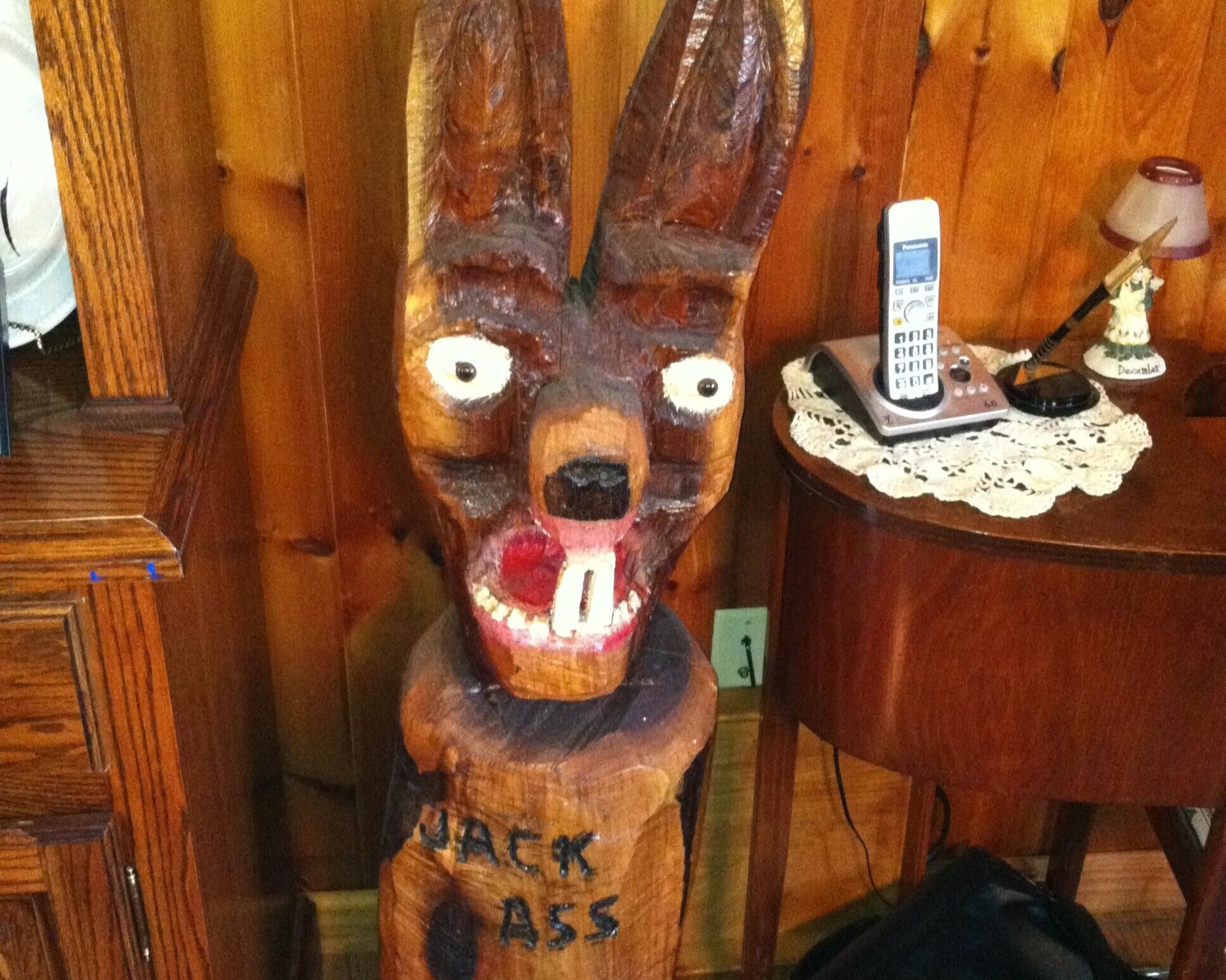
    A wooden rabbit sculpture next to a table

Description automatically generated

    So what, you say, where’s your connection? Well, several years ago I carved this funny bunny and called him jack-ass. After reading the jazz story about Nick LaRocca and the ODJB I have discovered new meaning and a new purpose for my jack-ass. I now refer to him as “father jazz”.

    Pick up the book, you won’t be disappointed.

    All the best-

    Dr. Papi

    02/18/2024

    • Leave a comment
    • Share
      Bella Musica!

      Share link

    Remembering Michael Brecker 

    This is an article that I wrote on Michael Brecker’s birthday, only 2 months after his untimely death in 2007. Having only shared this with a few close friends since then, I thought it would be fitting to publish it now after the 17th anniversary of his passing on January 13, 2007.

    I begin this chronicle with a recollection of some historical points of my jazz experience, both past and present. Being a saxophone student and performer since the ripe old age of 10, I can say that although I am not now (and will never be) considered one of the giants of the industry, I have attained a considerable amount of knowledge of the craft through my experiences of listening, performing, education, and teaching about the masters of the tenor saxophone both past and present throughout the history of the American musical genre of jazz.

    I have been lucky enough to rub elbows during this time with some very influential and accomplished musicians on the jazz scene who have given me a wealth of knowledge, understanding, and hours of personal instruction that have sent my head spinning in a never-ending quest to learn the idiosyncrasies that make this music so unique and definitive. During this process I have ultimately become a better musician myself, understanding that the gift of personal correspondence allows the musician to better appreciate the recorded works of their comrades and mentors. It is not my intent to drop the names of Joe Viola, Frank Tiberi, and Joe Lovano to identify who I am, but only to identify some of the educators and artists that have shaped me from a personal interaction in my jazz studies. Although these giants of jazz have had a profound influence on my life through personal contact, I have also been equally influenced by those performers that I only heard on record, or heard stories relayed to me by the mentors. Among these fantastic musicians was a man named Michael Brecker.

    During the last few years of his life, I was bestowed the great opportunity of meeting Michael Brecker, but his influence on me starts way before that. In 1976, when I was just a 15-year-old saxophonist playing in the school band I heard Brecker on the new album “Back to Back”, which became a popular fusion hit album soon after. My exposure at that time to saxophone was limited to one of my grandfather’s records of Coleman Hawkins playing “Body and Soul”. As a young saxophonist, my ears were turned inside out after listening to the modern approach by Brecker. Coltrane, Bird, and Miles were not part of my vocabulary at this time. I was, however, impressed enough by the sounds that I heard coming from this man’s horn, (along with the respect I had for my grandfather’s musicians) to seriously consider a career as a musician. Something about the Brecker finesses on the saxophone intrigued me enough to want to know as much about that instrument as I possibly could. The more I investigated, the more I became addicted.

    The night I met Michael Brecker was in March of 2004, at Birdland in N.Y. He was performing with David Liebman and Joe Lovano in a group called “the saxophone summit”. My connection to Lovano allowed me backstage access. Michael gave a riveting performance that evening including his trademark technical precision and soulful licks that have given him his easily recognizable sound. I remember thinking that he looked very pale and thin, though if you closed your eyes, you couldn’t tell he was suffering.

    After the show I waited backstage just to say hello and express my appreciation for his work. I had to wait for a few others to finish grabbing his ear first. When I finally did get to introduce myself all I could think of asking him was “Do you remember that record you made with Jack Wilkins back in 1977 called ‘You Can’t Live Without It’? Your solo on ‘Invitation’ has remained one of my favorites and has been very inspirational to me over the years”. He looked at me with tired eyes and managed to crack a polite smile. “That was a real, real, long time ago” he said as he shook his head to the side. I could sense that he was not in the mood for small talk, so I thanked him for his performance and said goodnight. That first encounter that I had with Michael Brecker turned out to be his last official public performance. Soon after that I learned about his illness and that he had cancelled the rest of his “summit” tour.

    As a forty-six-year-old school music teacher who still studies and plays the tenor saxophone, I would like to share with you one of the most inspirational thoughts of my recent past. While traveling to New York City along the metro-north railroad in January 2007 to the IAJE conference, I decided to listen to Michael Brecker’s latest CD called “Wide Angles”, which, incidentally, I had purchased at the IAJE two years before. As I looked out the train window at the cold river fading behind me, I could only imagine the great performances that awaited my arrival at the conference. The music that rang in my ears was nothing short of spectacular and it reminded me of the future in the sense of what new hip live sounds I was about to hear. There is no one hipper than Michael Brecker, let’s face it! I listened intently as I watched the icy river and the grey sky slip past my view from the rearward facing train seat. 

    When I got to the conference, I was astounded, and took in as much of the live event as I could. The performances, as usual, reminded me of the greatness of the human spirit that this music embodies. This annual conference attracts over 10,000 of the world’s most enthusiastic jazz aficionados, teachers, tradesmen, and professionals. There is no larger single gathering of the jazz community on earth! After three short days at the conference, after hearing some of the most uplifting and enjoyable performances of my life, and after finding time to say hello to some of my mentors, (Tiberi, Lovano) I stepped on the train and headed back upstate.

    When I arrived back home that evening, I learned that Michael Brecker, who had been seriously ill for some time, had passed away that afternoon from complications of a blood disorder. I was in shock. “The world has truly lost one of the greatest tenor saxophone masters of all time”, I thought. “How ironic that his passing coincided with the end of the conference.”

    I immediately emailed Wayne, an old friend and college buddy of mine who also is a tenor player and asked if he had heard the sad news. He had, and replied to me “Do you remember that time in 1982 when we drove around the Island of Hawaii listening to his ‘Straphangin’ recording? Wow! Wasn’t that the greatest thing we ever heard? Two tenor players fresh out of Berklee driving around the isle of paradise hanging on every note that came from the car stereo.”

    In the three months that have followed my trip to NY I have listened to many of my collection of Michael Brecker recordings and the one thing that keeps bothering me is a certain air of “finality” that permeates these recordings that I didn’t notice before. Not in the recording of 2004, the recording of 1982, or any of the many recordings in between. Even though I have listened to all of these records many times before, they suddenly sound different to me. Now, when I listen, I listen suddenly to a legacy instead of a contemporary. I always knew Michael Brecker was a great jazz saxophonist, I just never expected him to find a spot on my shelf this soon next to my Coltrane and Bird collections. Let us hope that the music of this giant of jazz lives forever, in our hearts and in our heads, with the other masters who have truly earned their place among the greatest saxophonists that have ever lived. God bless Michael Brecker. May a piece of him rest in all of us, and may he rest in peace.

    Michael Antonelli

    02/18/2024

    • Leave a comment
    • Share
      Remembering Michael Brecker

      Share link

    Larry

    Larry

    Tom

    Tom

    Papi

    Papi

    Ryan

    Ryan

    Bill

    Bill

    BJ

    BJ

    Share photo gallery
    HAL

    Share link

    Home at Last is:
    Bill Ware- writer, vibraphone, keys and vocals
    Michael Antonelli- writer, saxophones, flute and vocals
    BJ Antonelli- vocals, guitar

    Tom Rausch- bass, vocals

    Allison Antonelli- vocals (2023, 2025)
    Ryan Cerullo- keyboards
    Larry Lubkert- drums and percussion
    (2023-2024)

    Guerin Williams- drums (2025)

    Some images ©

    • Log out
    Powered by Bandzoogle